

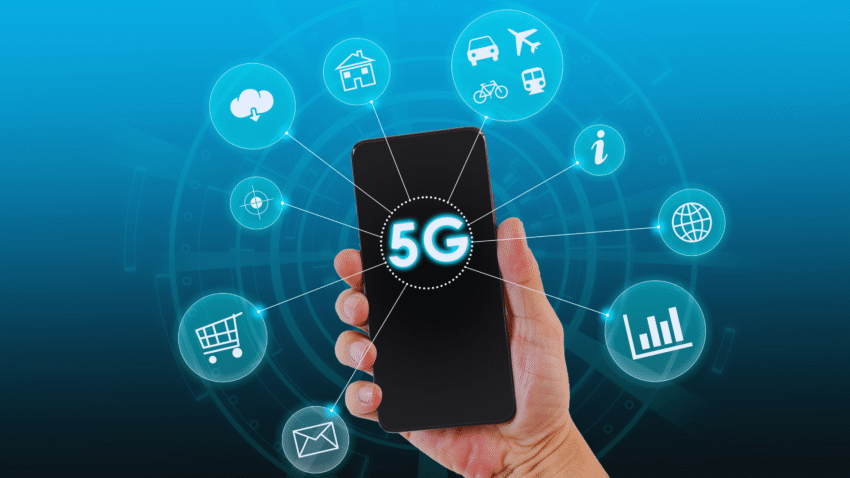
5G technology is transforming mobile connectivity by significantly increasing data speeds and reducing latency. It allows users to download and stream content faster, making mobile experiences smoother and more reliable. The most important benefit of 5G is its ability to support more devices simultaneously without compromising performance.
This improvement is crucial as the number of connected devices continues to grow, enhancing how people work, communicate, and access information on the go. It also opens new possibilities for technologies like smart cities, autonomous vehicles, and immersive virtual reality.
By providing faster, more stable connections, 5G is setting a new standard for mobile networks that better meet today’s digital demands. Users can expect a more seamless connection, even in crowded areas or remote locations.
How 5G Enhances Mobile Connectivity
5G technology significantly transforms mobile connectivity by addressing key performance areas: data transmission speeds, network responsiveness, and service customisation. These improvements enable more efficient wireless communication and better user experiences across diverse applications.
Faster Speeds and High-Speed Connectivity
5G networks offer data speeds up to 10 Gbps, which is several times faster than 4G. This boost in speed allows for rapid downloads, high-quality video streaming, and seamless cloud access on mobile devices.
The underlying technology uses millimetre wave bands and advanced antenna systems like Massive MIMO to support these faster connections. This results in reliable high-speed connectivity even in densely populated areas.
Moreover, 5G supports simultaneous connections for more devices without compromising speed. This improvement is crucial for the expansion of the Internet of Things and smart city technology.
Reduced Latency and Improved Response Times
Latency in 5G networks can drop to as low as 1 millisecond, drastically decreasing the delay between sending and receiving data. This improvement supports real-time applications like gaming, remote surgery, and autonomous vehicles.
Low latency enhances mobile communication by providing near-instant response times, which 4G networks struggle to achieve. This enables more interactive and immersive user experiences.
Wireless technology in 5G uses advanced routing and edge computing to minimise the distance data must travel. These factors combined allow mobile networks to meet the growing demand for fast and accurate data transmission.
Network Slicing for Customised Services
Network slicing divides a single 5G infrastructure into multiple virtual networks tailored for specific needs. Each slice can prioritise different aspects such as speed, latency, or security.
This allows operators to deliver optimised mobile network services for varying applications simultaneously: for example, ultra-reliable slices for emergency services alongside high-capacity slices for video streaming.
By enabling dynamic allocation of network resources, network slicing increases efficiency and reliability in 5G networks. It offers flexibility for both providers and users, adjusting connectivity according to precise service requirements.
Key Technologies Powering 5G Mobile Networks
5G networks rely on several advanced technologies to deliver faster speeds, lower latency, and improved reliability. These include enhanced processing at network edges, innovative antenna designs, and AI-driven optimisation. Each plays a critical role in addressing the demands of modern wireless communication.
Edge Computing for Real-Time Communication
Edge computing places data processing closer to end users by using local servers instead of centralised data centres. This proximity reduces latency to milliseconds, which is vital for applications like autonomous vehicles, remote surgery, and augmented reality.
By offloading processing from cloud centres, edge computing reduces network congestion and accelerates data responses. It enables devices to function with greater independence and reliability even when cloud connectivity is intermittent. This improves user experience by supporting real-time decision-making and continuous service.
Edge computing is a core component of 5G advanced infrastructure, particularly in dense urban areas with high data traffic. It allows operators to manage bandwidth efficiently while meeting the stringent requirements of low latency and high availability.
Advanced Antenna and Spectrum Use
5G employs advanced antenna technologies such as Massive MIMO (Multiple Input Multiple Output), which uses numerous antennas to transmit and receive simultaneously. This increases capacity and coverage, especially in high-density scenarios like stadiums or city centres.
Innovative beamforming techniques focus wireless signals directly towards users rather than broadcasting broadly. This targeted transmission improves signal strength and reduces interference.
Additionally, 5G leverages a broader spectrum range, including millimetre waves (mmWave) and mid-band frequencies. The use of diverse spectrum bands allows networks to balance coverage and throughput effectively, supporting various applications from wide rural areas to dense urban hotspots.
Integration with Artificial Intelligence
Artificial intelligence (AI) plays a significant role in automating network management and optimisation. AI algorithms analyse network traffic in real-time to predict congestion, allocate resources, and detect faults before they impact users.
AI-driven automation enhances the efficiency of 5G technologies by dynamically adapting network parameters based on usage patterns. This reduces operational costs and improves service quality.
Moreover, AI supports advanced use cases such as security threat detection and quality-of-service adjustments tailored to specific applications. Its integration within 5G networks ensures continuous performance improvements and smoother user experiences through intelligent decision-making.
Transformative Applications and Industry Impact
5G technology fuels advancements across multiple sectors by delivering faster speeds, lower latency, and better network capacity. These improvements support richer media experiences, enhanced automation, and innovative industrial processes, reshaping how people work and connect.
Smartphones and Enhanced Video Streaming
5G networks significantly enhance smartphone capabilities, allowing users to stream high-definition and 4K video content without buffering. The increased bandwidth supports seamless video calls and real-time interactive applications, making communication clearer and more reliable.
Video streaming platforms optimise their services for 5G, enabling features like augmented reality (AR) overlays and adaptive bitrate streaming. This ensures smooth playback even in crowded areas or on mobile devices.
5G’s reduced latency enhances live broadcasts and gaming via smartphones, elevating user engagement and satisfaction. It also supports faster downloads and uploads, improving the overall mobile experience.
Internet of Things and Smart Factories
The Internet of Things (IoT) benefits from 5G’s ability to connect millions of devices simultaneously with minimal delay. This capacity is crucial for smart factories where sensors and machines communicate in real time to improve manufacturing efficiency.
5G enables precise monitoring and control of equipment, reducing downtime and maintenance costs. Data collected through IoT devices is transmitted instantly for analysis, which leads to better decision-making and predictive maintenance.
In smart factory environments, automation powered by 5G improves production quality and safety. Wireless connectivity removes the need for cumbersome cables, enhancing flexibility on the factory floor.
Industry 4.0 and Digital Twins
Industry 4.0 integrates 5G with digital technologies like artificial intelligence and machine learning. Digital twins, virtual replicas of physical assets or systems, rely on 5G to receive real-time data, improving simulation accuracy.
The real-time data flow supports rapid testing of processes, identifying faults before they happen. This accelerates product design cycles and reduces operational risks.
5G’s low latency ensures instant feedback loops between digital twins and their physical counterparts. This interaction leads to smarter asset management and more efficient resource use across industries.
Telemedicine and Remote Maintenance
Telemedicine uses 5G to enable high-quality video consultations, remote diagnostics, and even robotic surgery. The network’s reliability and speed ensure clear, uninterrupted communication between doctors and patients.
Remote maintenance of industrial equipment benefits from 5G by providing instant data access and control. Technicians can perform complex repairs or adjustments remotely using augmented reality tools over 5G networks.
This connectivity reduces the need for on-site visits, lowering costs and speeding up response times. It is particularly valuable in hazardous or hard-to-reach locations, improving safety and operational continuity.
The Future of 5G Connectivity in Everyday Life
5G technology enables faster data speeds, lower latency, and increased device capacity, critically transforming key areas of daily life. Its impact stretches from transportation and entertainment to global communication and network infrastructure improvements.
Autonomous Vehicles and Augmented Reality
5G’s low latency allows autonomous vehicles to process data in real time, improving reaction times and decision-making on the road. Vehicles communicate with other cars and infrastructure to enhance safety and traffic management, reducing accidents.
Augmented reality (AR) applications benefit from 5G by delivering high-quality visuals without lag. Users experience seamless interactions in gaming, education, and workplace training, supported by the network’s ability to handle large data volumes with minimal delay.
Global Collaboration Through Improved Networks
The capacity and speed of 5G networks facilitate enhanced global collaboration. Professionals can share high-resolution files, conduct virtual meetings, and access cloud-based tools without connectivity interruptions.
5G enables remote work with greater reliability, supporting video conferencing and real-time data exchange. This shift reduces geographical barriers and allows businesses to operate efficiently across time zones with improved network stability.
Evolution from 4G to 5G
5G networks build on 4G technology but offer significant advancements in speed—up to 100 times faster—and latency reductions from approximately 50 milliseconds in 4G to under 10 milliseconds. This improvement supports more connected devices and high-bandwidth applications.
Unlike 4G, 5G uses new spectrum bands and network architectures, including millimetre waves and massive MIMO, which increase capacity and coverage. These changes underpin the expansion of smart cities, Internet of Things (IoT) devices, and real-time services that 4G cannot effectively support.