

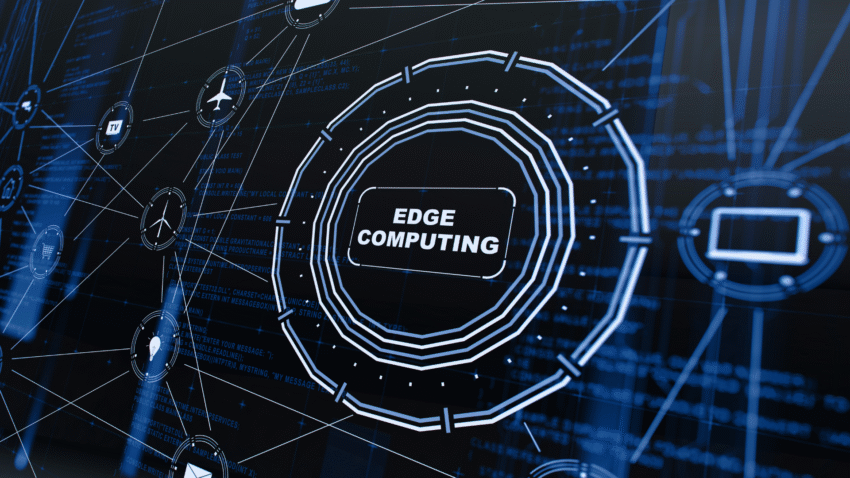
Edge computing is quickly becoming a vital component of data processing strategies. By decentralising data storage and processing, it reduces latency and enhances real-time analytics. This shift allows businesses to operate more efficiently and respond swiftly to market demands.
As more devices become interconnected through the Internet of Things (IoT), the need for local data processing intensifies. Edge computing addresses this necessity by allowing data to be processed closer to its source, minimising delays and bandwidth usage. This capability empowers organisations to leverage data insights immediately, fostering better decision-making.
The transformation brought about by edge computing significantly impacts various industries, from manufacturing to healthcare. As organisations adopt this technology, they unlock new opportunities for innovation and operational efficiency. Understanding these changes can help businesses stay ahead in an increasingly data-driven world.
The Fundamentals of Edge Computing and Data Processing
Edge computing significantly influences how data is processed within IT ecosystems. By localising computation closer to data sources, it enhances performance and decreases latency, leading to more efficient operations.
Defining Edge Computing within Modern IT Ecosystems
Edge computing involves processing data at the edge of the network, near the data source, rather than relying solely on centralised data centres. This approach enables real-time data analysis and immediate responses, which is essential for applications requiring low latency, such as autonomous vehicles or smart manufacturing.
Edge devices, including sensors, IoT devices, and gateways, play a crucial role in this ecosystem. They collect and analyse data before sending relevant information to centralised cloud systems. The integration of edge infrastructure helps businesses manage data traffic more efficiently, thus optimising the overall IT environment.
Data management becomes more complex when information moves between many different points. Organisations need a way to track which data is the most accurate and up to date. This is where a central system of record becomes necessary for the business. It acts as the final source of truth for all the information gathered at the edge. Without this clear structure, teams might struggle with conflicting reports from different devices. Having a single source helps keep all departments on the same page.
How Edge Computing Differs from Traditional Cloud Computing
Traditional cloud computing centralises data processing in remote data centres, which can introduce higher latency due to the distance data must travel. In contrast, edge computing processes data closer to the source, significantly reducing response times.
While cloud computing offers scalability and flexibility, it might not suffice for applications that require immediate data interpretation. Edge computing accommodates these needs by allowing for instantaneous processing. Moreover, it offloads some data traffic from the cloud, resulting in cost savings and improved resource management.
The Role of Distributed Computing in Edge Environments
Distributed computing is a key feature of edge environments, facilitating data processing across multiple edge devices rather than relying on a single point of failure. This decentralised approach enhances resilience and scalability, allowing systems to manage larger volumes of data more effectively.
In edge computing, distributed computing ensures that data is processed locally first, optimally managing bandwidth while maintaining security. By enabling real-time analytics at the edge, organisations can make quicker decisions based on timely insights. This capability is particularly advantageous in sectors like healthcare and manufacturing, where immediate data processing can lead to improved outcomes.
Key Benefits and Impacts on Efficiency and Latency
Edge computing significantly enhances data processing by improving operational performance, reducing latency, and optimising network architecture. The implementation of this technology leads to more efficient data management and stronger security measures.
Improved Efficiency and Operational Performance
Edge computing allows data to be processed closer to where it is generated, reducing the need for back-and-forth data transfers. This proximity to data sources enhances operational efficiency by enabling quicker decision-making and less reliance on centralised data centres.
By offloading some processing tasks to edge devices, organisations can allocate bandwidth more effectively. This results in higher throughput and maximises the use of available resources. Additionally, edge computing reduces the load on core networks, improving response times for critical applications.
Enabling Low Latency and Real-Time Data Processing
One of the standout features of edge computing is its ability to significantly lower latency. Data is processed at the edge of the network, resulting in minimal delays. This is crucial for applications that require immediate responses, such as autonomous vehicles and industrial automation.
For instance, in smart manufacturing, real-time data processing is essential for monitoring equipment performance. The reduced latency allows for instant adjustments, minimising downtime and optimising output. Low-latency environments foster better user experiences in services like video conferencing and online gaming.
Enhancing Data Security and Privacy
Data security is paramount in any data processing environment. Edge computing improves privacy by allowing sensitive information to be processed locally rather than transmitted to a central server. This helps mitigate risks of data breaches or interception during transit.
Furthermore, decentralised data processing means that even if one edge device is compromised, it does not endanger the entire system. Encryption and authentication protocols can be more easily implemented at the edge, enhancing overall data security. This approach ensures that organisations can maintain compliance with data protection regulations more effectively.
Optimising Network Architecture for Edge Workloads
The shift to edge computing necessitates a re-evaluation of network architecture. By distributing workloads across many edge devices, organisations can achieve better bandwidth utilisation. This reduces the pressure on centralised servers and enhances the performance of applications.
Adopting a distributed architecture leads to improved scalability, as new edge nodes can be added easily without overhauling the entire system. This flexibility is crucial for businesses anticipating growth or changing workloads. Additionally, such an architecture ensures robustness, as the failure of a single node has minimal impact on overall network performance.
Transformative Applications Across Industries
Edge computing is driving innovation by enabling real-time data processing closer to the source. This leads to improved efficiency and responsiveness across various sectors, such as IoT, manufacturing, and autonomous vehicles.
Edge Computing in the Internet of Things and Industrial Environments
Edge computing enhances the Internet of Things (IoT) by processing data locally on devices. This architecture reduces latency and bandwidth usage, allowing for quicker decision-making.
IoT devices equipped with sensors can instantly analyse data related to equipment performance, environmental conditions, and user interactions. For instance, smart sensors in industrial settings can provide real-time insights into machinery health, reducing downtime through predictive maintenance.
The integration of edge analytics allows companies to monitor processes with greater precision. This results in increased efficiency and better resource management, ultimately driving operational excellence.
Smart Manufacturing and Automation
In smart manufacturing, edge computing streamlines operations by enabling real-time data analysis. Machines and robots equipped with edge devices can communicate and make decisions autonomously.
Through this technology, manufacturers can optimise production lines. Machines can adjust their operations based on real-time data, enhancing productivity and product quality. This allows for just-in-time production, reducing waste and inventory costs.
To manage these fast-paced operations, plant managers need simple tools to track employee time and job costs. Some facilities invest in heavy enterprise resource planning software. However, others find that lightweight tracking systems work better for their daily needs. These simpler tools help teams monitor work-in-progress without the high costs and long setup times of larger platforms. Decision-makers often Compare Standard Time to E2 Shop to see which approach fits their shop floor. Choosing the right system keeps production schedules accurate.
Automation of quality inspection processes also benefits from edge computing. With immediate data analysis, defects can be detected swiftly, ensuring high standards are maintained throughout the manufacturing cycle.
Furthermore, edge computing can help industrial facilities respond more effectively to changing operational demands by making critical data available closer to the source. This can be particularly valuable in environments that rely on essential systems such as a rotary screw air compressor, industrial cooling units, and material handling equipment.
With faster access to operational information, facility managers can make timely adjustments, improve resource allocation, and maintain more consistent production outcomes without relying solely on centralized data processing.
Autonomous Driving and Vehicle Technologies
Autonomous vehicles rely heavily on edge computing to process vast amounts of data from sensors and cameras. This capability is crucial for decision-making in real time.
By operating with low latency, edge computing ensures that vehicles can interpret their surroundings quickly and accurately. This technology enhances safety and reliability, as vehicles can react promptly to changes in traffic conditions or obstacles.
Additionally, vehicle-to-everything (V2X) communication benefits from edge processing. Vehicles can share information with infrastructure, other vehicles, and cloud services, leading to more coordinated traffic management and enhanced road safety.
Emerging Trends, Technologies, and Business Implications
The landscape of edge computing is rapidly evolving, with significant advancements in network capabilities and integration of advanced technologies. These changes hold substantial implications for businesses and their operational strategies.
Leveraging 5G and Advanced Network Capabilities
The deployment of 5G technology is a game changer for edge computing. With higher bandwidth and reduced latency, 5G enables real-time data processing and analysis closer to the data source. This results in faster decision-making, essential for applications like autonomous vehicles and smart cities.
Furthermore, advanced network capabilities allow for improved connectivity among devices. This creates robust enterprise networks that can handle increased data traffic without compromising performance. Managed services can help organisations optimise their network infrastructure to fully leverage these benefits.
Integrating Artificial Intelligence and Machine Learning at the Edge
Artificial intelligence (AI) and machine learning (ML) are now being integrated directly into edge devices. This allows for on-device processing, enabling faster insights and reduced reliance on centralised systems. Applications include predictive maintenance and real-time analytics for various industries, from manufacturing to healthcare.
The synergy of AI, ML, and edge computing enhances the quality of customer and user experience. Personalised services and predictive insights can be delivered instantly, catering to specific user needs. This capability drives efficiency and can significantly reduce operational costs.
Maximising Customer and User Experience
Edge computing plays a crucial role in enhancing customer and user experience by providing tailored services. By processing data locally, organisations can offer immediate responses to customer interactions. This immediacy is vital in maintaining competitive advantage, especially in sectors like retail and finance.
Additionally, this technology supports interactive and immersive applications, such as augmented reality (AR) and virtual reality (VR). By leveraging edge capabilities, businesses can create engaging experiences that resonate with customers, fostering greater loyalty and satisfaction.
New Business Models and Revenue Streams
The shift towards edge computing is giving rise to new business models. Companies can explore subscription-based services and pay-per-use models, enabling flexible pricing strategies. These approaches allow businesses to scale their offerings based on customer demand.
Moreover, organisations can capitalise on insights obtained from data processed at the edge. This can lead to the creation of innovative services and applications, thus unlocking new revenue streams. By harnessing data-driven strategies, firms are better positioned to adapt to evolving market conditions and customer preferences.